Architect Larnaca Cyprus: How to Choose the Right Professional for Your Project
Larnaca is in the middle of a sustained construction and development boom. New residential complexes are rising along the seafront, the marina district is being transformed, and demand for both private villas and multi-unit developments continues to grow. If you are planning to build, renovate, or develop property in Larnaca, working with the right architect is one of the most consequential decisions you will make.
This guide explains what a qualified architect in Larnaca, Cyprus does, what you should expect from the process, and how to evaluate firms before you commit to one.
What an Architect in Larnaca Actually Does
An architect in Cyprus is both a designer and a technical professional. Beyond creating the visual concept for your project, they are responsible for producing the full set of drawings required for a building permit, liaising with the Department of Town Planning and Housing, coordinating with civil engineers and contractors, and ensuring the project complies with Cyprus building regulations.
In Larnaca specifically, local knowledge plays a significant role. Zoning rules, plot coverage ratios, height restrictions, and setback requirements vary by area. An architect who works regularly in Larnaca understands how the municipality processes applications, what the planning authority typically scrutinises, and how to structure a submission that moves efficiently through the approval process.
The scope of architectural services typically includes: – Feasibility assessment and site analysis – Preliminary and detailed design – Building permit application and follow-up – Construction supervision – Coordination with structural engineers, MEP consultants, and contractors – Interior design integration where required
Choosing a Qualified Architect in Cyprus
In Cyprus, architects must be registered with the Cyprus Scientific and Technical Chamber (ETEK). This registration is mandatory and confirms that the professional holds the required academic qualifications and is legally authorised to practice. When engaging an architect, always verify their ETEK registration.
Beyond registration, experience is the primary differentiator. A firm that has completed residential villas, apartment complexes, commercial buildings, and hospitality projects brings a range of problem-solving capability that a newer practice simply cannot match. Ask to see a portfolio that reflects the type of project you have in mind. If you are building a private villa in Drosia, look for completed villa projects. If you are planning a multi-unit residential block near the marina, ask specifically about multi-unit experience.
Communication matters as well. Cyprus attracts a significant number of international buyers and investors, and the better firms are accustomed to working with clients from the UK, Israel, Russia, and across the EU. If English is your working language, confirm that the firm handles all documentation, meetings, and reporting in English.
The Building Process in Larnaca: What to Expect
Once you have engaged an architect, the process in Cyprus follows a defined sequence. The architect begins with a site assessment, reviews the planning zone rules that apply to your plot, and prepares a preliminary design based on your brief and the permitted parameters.
The building permit application is then submitted to the Department of Town Planning and Housing. Processing times in Larnaca can range from a few months to over a year, depending on the complexity of the project, the zone, and the completeness of the submission. An experienced architect will front-load the application with thorough documentation to avoid requests for additional information that slow things down.
During construction, the architect provides site supervision to confirm that the work matches the approved drawings. This is not just a contractual formality; it protects your investment and is required to obtain the certificate of final approval at completion.
Key stages to understand: 1. Site analysis and design brief 2. Preliminary design and client approval 3. Final drawings and permit application submission 4. Municipality and planning authority review 5. Permit issuance 6. Construction phase supervision 7. Final inspection and certificate of approval
Why Larnaca Is a Strong Market for Architecture and Development
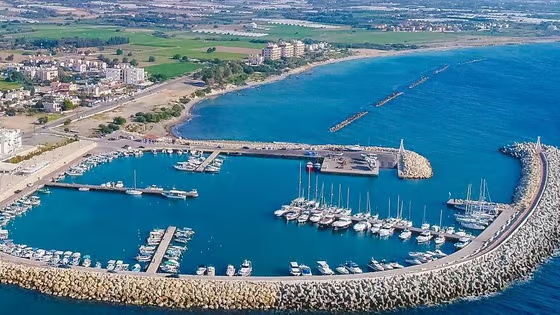
Larnaca has shifted from being seen as the quieter alternative to Limassol into a city with serious investment momentum. The Larnaca Marina redevelopment project is the most transformative urban project in the city’s recent history, with a mixed-use marina district that will include residential units, hotels, retail, and waterfront amenities. The seafront corridor from the marina toward Mackenzie Beach and beyond has attracted significant developer interest.
Beyond the marina, areas such as Drosia, Livadia, Oroklini, and the Finikoudes seafront zone continue to see demand for both private residences and investment properties. The airport expansion has reinforced Larnaca’s position as a logistics and connectivity hub, attracting business relocations and professional households.
For those planning to build or develop in this environment, engaging an architect who is actively working in Larnaca and understands its current planning landscape is a practical advantage. Generic architecture firms without a local base often underestimate processing timelines and local regulatory nuance.
Why Work With M. Photiou Architecture Studio
M. Photiou Architecture Studio has been operating in Larnaca for over 30 years. The firm holds a European architecture award and has completed residential, commercial, hospitality, and leisure projects across Cyprus. Their completed portfolio includes private luxury villas, large-scale apartment developments, marina-adjacent projects, and mixed-use buildings across Larnaca.
The team handles the full project lifecycle, from initial design and permit submission through to construction supervision and project completion. For clients based outside Cyprus, the firm is experienced in remote collaboration and provides full English-language support throughout the process.
If you are ready to discuss a project, contact M. Photiou Architecture Studio to arrange a consultation. You can also review their services and explore completed projects on their website.
Working with a qualified, locally experienced architect in Larnaca is not a formality; it is the foundation on which every successful construction project in Cyprus is built.